

Shapely Bee - French Corset Advertisement, Belle Époque
Shapely Bee - French Corset Advertisement, Belle Époque
Couldn't load pickup availability
Share
The story of the corset is one of the longest in the history of fashion — stretching back over three thousand years. The earliest corset-like garments appear in ancient Crete, where the Minoan civilization of around 1600 BC used tight waist-cinching belts to sculpt the body into an idealized silhouette. Centuries later, in 16th century Europe, stiffened bodices called stays emerged at the royal courts of France and Italy, reinforced with whalebone, wood, and metal — the direct ancestors of the modern corset.
It was Catherine de Medici (1519–1589), Queen of France, who famously popularized the rigid, wasp-waisted silhouette at the French court, reportedly forbidding thick waists among her ladies-in-waiting. From that moment, the corset became inseparable from European ideas of femininity, elegance, and social status. By the 19th century, advances in manufacturing — steel busk closures, spiral steel boning, and mass production — made the corset available to women of all classes, and it reached the height of its cultural power during the Belle Époque.
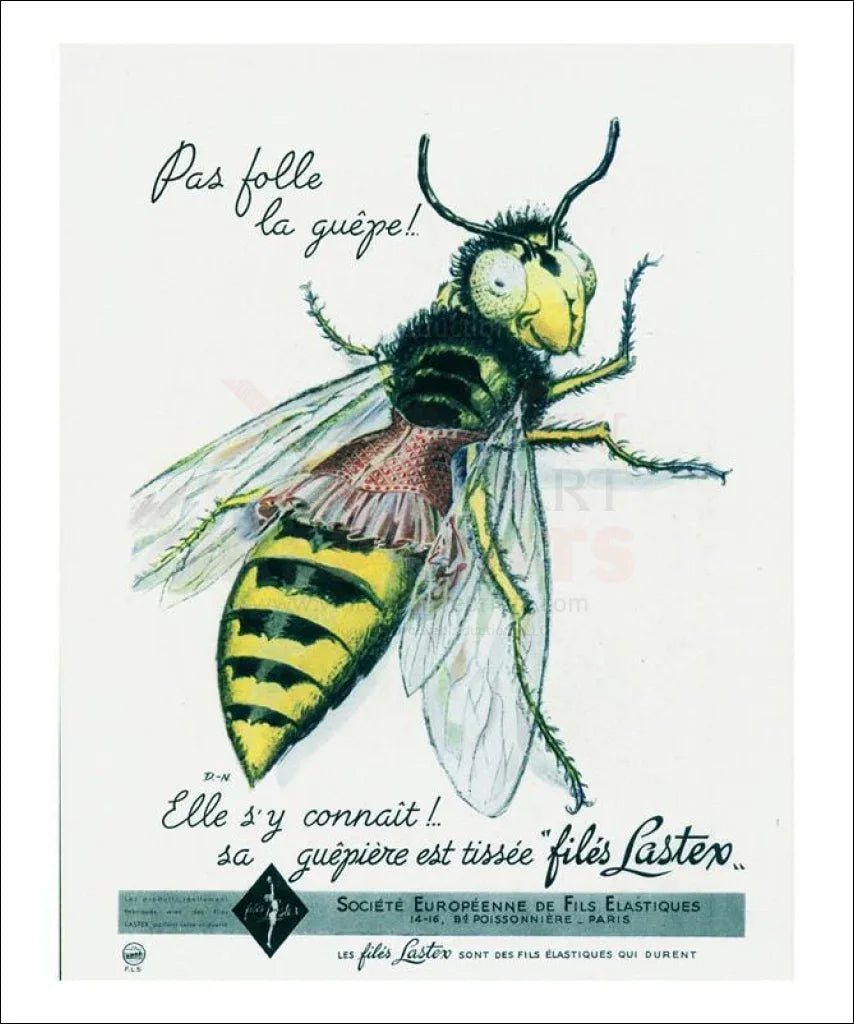
This witty and charming advertising poster captures that moment perfectly. A bee — nature's own perfectly cinched, hourglass-waisted creature — was chosen as the ideal model for a corset advertisement. The visual pun is irresistible: if even the bee is shapely, imagine what the right corset could do for you.
A delightful piece of Belle Époque advertising art — playful, inventive, and steeped in three thousand years of fashion history.
Giclee reproductions on luster premium photo paper.
-
High Quality Reprints
Every piece of art is printed using premium materials. We carefully package and deliver your order to your door.
-
Wholesale Orders
We welcome wholesale inquiries on some of our products. Click here to learn more about our offering.
Sign Up for Our Newsletter
Get a sneak peek on upcoming promos and get 10% off your first order.